

Summer Travel Experiences are not defined by how many places you visit, but by how intentionally those experiences are structured. In a season where everything feels fast, crowded, and overstimulating, the real challenge isn’t finding things to do—it’s choosing the right kind of experiences to shape your trip.
Most travelers approach summer with a checklist mindset. Beaches, cities, food, nightlife. But without structure, these become disconnected moments instead of a cohesive journey.
A true Summer Travel Experiences framework focuses on how experiences interact with each other—how they build rhythm, contrast, and emotional continuity across your trip.
Layer 1: Core Experience Types (The Foundation of Every Trip)
Every strong summer trip is built on a combination of 3–4 core experience types. These are not activities—they are modes of experience.
1. Water & Coastal Experiences


In destinations like Phú Quốc or Bali, water creates a natural slowdown. Time becomes less structured, and the experience becomes more sensory.
Typical forms:
- Swimming, snorkeling, or diving
- Beach lounging and sunset watching
- Boat trips or island hopping
These experiences are less about action and more about presence.
2. Urban Exploration Experiences


Cities such as Tokyo or Bangkok provide density—multiple experiences compressed into a single day.
This includes:
- Street exploration and neighborhood discovery
- Cultural sites and architecture
- Night markets and urban nightlife
Urban experiences create momentum. They move the trip forward.
3. Nature Immersion Experiences


In places like Sapa or Interlaken, the experience shifts from stimulation to restoration.
Common patterns:
- Trekking or slow hiking
- Scenic viewpoints and landscapes
- Quiet, low-interruption environments
These experiences reset attention and reduce cognitive load.
4. Food-Centric Experiences

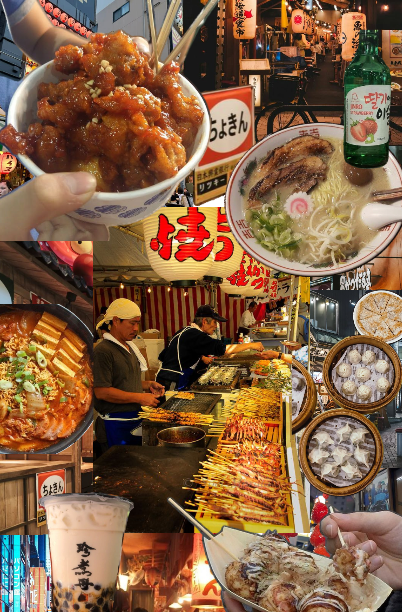

Food is often treated as secondary, but in reality, it’s one of the most immersive forms of travel.
In cities like Osaka:
- Eating becomes exploration
- Movement is guided by taste, not plans
- Time becomes flexible and social
Food experiences connect you to local culture faster than almost anything else.
Layer 2: Experience Intensity (How Your Trip Feels Day-to-Day)


Not all experiences carry the same intensity. One of the biggest mistakes in planning is stacking too many high-intensity experiences together.
High-Intensity Experiences
- Full-day city exploration
- Adventure activities (diving, trekking)
- Packed itineraries
Low-Intensity Experiences
- Beach time
- Café culture
- Scenic walks
Smart Structuring Principle:
Instead of:
- High → High → High
Use:
- High → Low → Medium
Example:
- Day 1: Explore Tokyo
- Day 2: Relax (spa, café, slow day)
- Day 3: Light exploration
This creates sustainability.
Layer 3: Time-Based Experience Design (Morning–Afternoon–Night)


A strong Summer Travel Experiences strategy respects time cycles.
Morning (Exploration Phase)
- Best for outdoor activities
- Higher energy, lower crowds
Afternoon (Recovery Phase)
- Heat + fatigue peak
- Ideal for indoor or slow experiences
Night (Social / Emotional Phase)
- Food, nightlife, atmosphere
- More spontaneous, less structured
Example Flow:
- Morning: explore a district
- Afternoon: rest / café
- Night: street food in Bangkok
Layer 4: Experience Contrast (The Missing Element in Most Trips)


A trip without contrast feels flat—even if it’s full.
Contrast creates memory.
Types of Contrast:
- Fast vs slow
- Social vs solitary
- Urban vs natural
Example Combination:
- Busy days in Tokyo
- Followed by quiet time in Phú Quốc
This shift amplifies both experiences.
Layer 5: Planned vs Unplanned Experiences


The best Summer Travel Experiences are not fully planned.
Planned:
- Major activities
- Transport and logistics
Unplanned:
- Wandering
- Local discoveries
- Spontaneous decisions
Key Insight:
Overplanning reduces discovery.
Leaving space increases it.
Layer 6: Experience Personalization (What Most People Ignore)


Not all experiences are universal.
What works depends on:
- Personality (introvert vs extrovert)
- Travel goal (rest vs exploration)
- Group type (solo, couple, family)
Example:
- Solo traveler → more flexible, exploratory
- Couple → more curated, slower
- Group → structured, activity-heavy
A strong Summer Travel Experiences framework adapts to this.
Layer 7: Building a Complete Experience System

Instead of asking:
“What should I do?”
Ask:
“How should this trip feel from start to finish?”
A Complete Experience Mix Might Look Like:
- 30% exploration (city, culture)
- 30% relaxation (beach, slow time)
- 20% food experiences
- 20% unplanned moments
Final Perspective
A great trip is not built by adding more experiences.
It’s built by combining the right ones, in the right order, with the right intensity.
That’s what turns random moments into a coherent journey—and transforms simple Summer Travel Experiences into something that actually stays with you long after the trip ends.
