
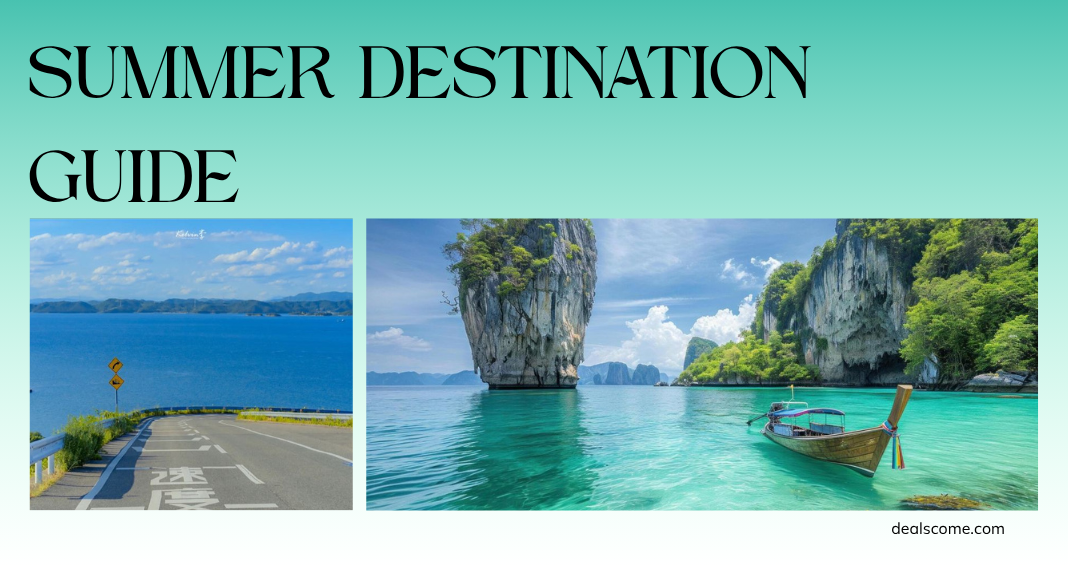
Plan your perfect trip with this Summer Destination Guide featuring top beach escapes, cool mountain retreats, and vibrant city breaks for every travel style and budget.
Summer isn’t just a season—it’s a mindset. It’s the urge to leave routine behind, chase sunlight across coastlines, breathe cooler air in mountain towns, and rediscover the world through movement. A well-crafted Summer Destination Guide doesn’t simply list places—it maps experiences, emotions, and possibilities.
The Core Philosophy Behind a Strong Summer Destination Guide
Before choosing destinations, it’s important to understand how modern summer travel works.
Summer travel today is shaped by three forces:
- Accessibility (cheap flights, remote work flexibility)
- Social influence (trending destinations, visual culture)
- Personal optimization (time, cost, experience density)
This means a Summer Destination Guide should help you:
- Filter noise, not add to it
- Compare destinations across multiple dimensions
- Adapt ideas into your own version of travel
A destination is no longer “good” or “bad”—it’s only “aligned” or “misaligned.”
Coastal & Island Escapes: The Classic Summer Core
No Summer Destination Guide is complete without beaches. But instead of treating them as a single category, it’s more useful to break them into sub-types.
1. Accessible Tropical Islands


- Phú Quốc
- Phuket
- Bali
These destinations balance:
- Affordability
- Infrastructure
- Variety of activities
Typical experience flow:
- Morning: beach or swimming
- Afternoon: café, spa, or light exploration
- Evening: seafood, night markets, or beach bars
They work well for:
- First-time travelers
- Group trips
- Flexible itineraries
2. Premium & Luxury Island Experiences


- Maldives
- Bora Bora
These destinations are less about movement and more about immersion.
Key characteristics:
- High cost per day, low activity density
- Focus on privacy and environment
- Strong emphasis on accommodation experience
Best suited for:
- Honeymoon travel
- Milestone trips
- Short but high-impact vacations
3. Raw & Underrated Coastal Alternatives


- Ninh Thuận
- Lombok
These destinations offer:
- Fewer crowds
- Lower costs
- Less polished infrastructure
Trade-offs to consider:
- Limited transport options
- Fewer luxury services
- More planning required
But in return, they provide:
- Authentic local interaction
- More natural landscapes
- Greater sense of discovery
Mountain & Cool-Climate Destinations: The Anti-Summer Strategy
A sophisticated Summer Destination Guide always includes an escape from heat. These destinations flip the expected narrative of summer.
High-Altitude Retreats


- Đà Lạt
- Sapa
- Interlaken
What makes them unique:
- Temperature contrast
- Slower pace
- Visual landscapes (mountains, forests, mist)
Experience Structure in Cool Destinations
Instead of long activity lists, these trips revolve around atmosphere:
- Early mornings with low temperatures
- Scenic walking or trekking
- Café culture and local food
- Photography-focused exploration
You’re not trying to “do more”—you’re trying to “feel more.”
When to Choose Mountains Over Beaches
Choose mountains if:
- You dislike humidity and heat
- You prefer quiet over nightlife
- You enjoy nature and slow travel
Choose beaches if:
- You want social energy
- You prefer convenience
- You’re traveling in groups
Urban Summer Destinations: High-Density Experience Zones
Cities often get overlooked in a Summer Destination Guide, but they offer one key advantage: density.
Dynamic Summer Cities


- Tokyo
- Bangkok
- Barcelona
Why cities work in summer:
- Extended daylight hours
- Seasonal festivals and events
- Nighttime economies (markets, rooftop bars, street food)
Optimizing a Summer City Trip
Cities require strategy:
- Schedule outdoor exploration early morning or late evening
- Use midday for indoor activities (museums, malls, cafés)
- Focus on neighborhoods rather than landmarks
Example structure:
- Day 1: Arrival + light exploration
- Day 2: Cultural sites + local food
- Day 3: Neighborhood deep dive + nightlife
Trending vs. Hidden: Strategic Destination Selection
Every Summer Destination Guide must address this decision.
Trending Destinations


- Santorini
- Ibiza
Advantages:
- Proven experiences
- Strong visuals
- Easy planning
Disadvantages:
- Crowds
- Higher prices
- Less flexibility
Hidden Alternatives
- Ninh Thuận
- Lombok
Advantages:
- Lower cost
- More space
- Authenticity
Disadvantages:
- Less information available
- More planning effort
Hybrid Strategy
A strong approach is to combine both:
- Start with a trending destination
- Move to a nearby hidden location
This balances:
- Social experience
- Personal discovery
Decision Framework: Building Your Own Summer Destination Guide
Instead of copying itineraries, build your own using this layered approach.
Layer 1: Intent
Ask:
- Do I want to relax, explore, or reset?
- Am I traveling solo, with friends, or family?
Layer 2: Constraints
Define:
- Budget range
- Number of days
- Travel distance tolerance
Layer 3: Environment
Choose:
- Beach
- Mountain
- City
- Hybrid
Layer 4: Experience Type
Pick your dominant experience:
- Food-focused
- Nature-focused
- Luxury-focused
- Cultural immersion
Sample Multi-Style Summer Itineraries
These are not rigid plans—they’re frameworks.
5-Day Minimalist Escape
- Destination: Phú Quốc
- Focus:
- Beach relaxation
- Light exploration
- Food experiences
7-Day Balanced Trip
- Stop 1: Bangkok
- Stop 2: Bali
Structure:
- 3 days city
- 4 days island
10-Day Premium Experience
- Stop 1: Dubai
- Stop 2: Maldives
Focus:
- Contrast between urban luxury and natural isolation
The Evolution of Summer Travel
A modern Summer Destination Guide reflects how travel behavior is changing.
Key Shifts
- Shorter but more intentional trips
- Blending work and travel
- Preference for experiences over checklists
New Travel Behaviors
- Booking later but traveling smarter
- Choosing fewer destinations with deeper exploration
- Prioritizing flexibility over rigid schedules
Final Perspective: Travel as Design, Not Consumption


The strongest Summer Destination Guide doesn’t tell you where to go—it teaches you how to choose.
It helps you move from:
- Random decisions → intentional planning
- Trend-following → self-aligned travel
- Overpacked itineraries → meaningful experiences
Whether you find yourself:
- On the beaches of Phú Quốc
- In the mountains of Sapa
- Or navigating the streets of Tokyo
The destination is only part of the story.
The rest is how you choose to experience it.
Closing Call
Build your own Summer Destination Guide with intention:
- Define your energy
- Choose your environment
- Structure your time
- Leave space for discovery
Because the best summer trips are not the most expensive or the most popular.
