
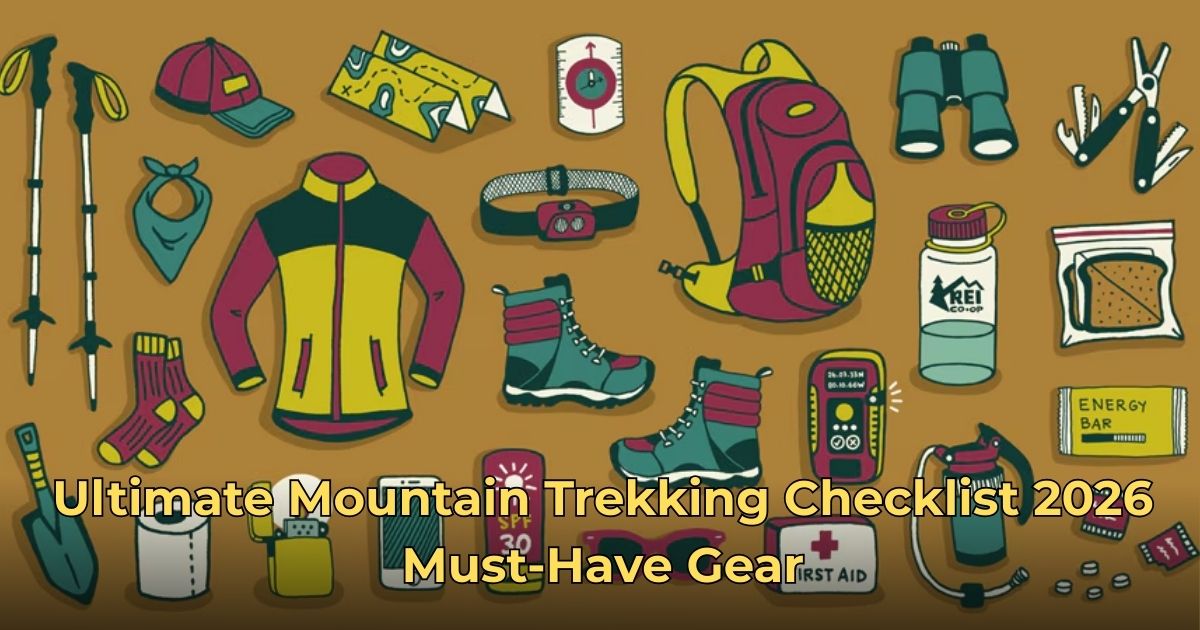
Complete mountain trekking checklist 2026: essential gear, clothing layers, safety items & packing tips for multi-day hikes. Prepare for high-altitude adventures safely and comfortably – download the full list now!
Mountain trekking in 2026 offers some of the most rewarding outdoor experiences — breathtaking panoramic views, personal challenge, mental clarity, and deep connection with nature. Whether you’re planning a classic trek in the Himalayas (Everest Base Camp, Annapurna Circuit), the Alps (Tour du Mont Blanc), the Rockies, Patagonia, or shorter highland routes, proper preparation is the difference between an unforgettable journey and an uncomfortable or even dangerous one.
This comprehensive mountain trekking checklist for 2026 has been refined from real multi-day expeditions and updated with the latest lightweight gear trends, sustainable choices, and safety priorities. Customize according to trek duration, altitude, season, weather forecast, and whether the trip is guided or fully self-supported.
1. The Big Three – Core Carry Items for mountain trekking checklist
These make up the heaviest part of your pack — choose wisely.
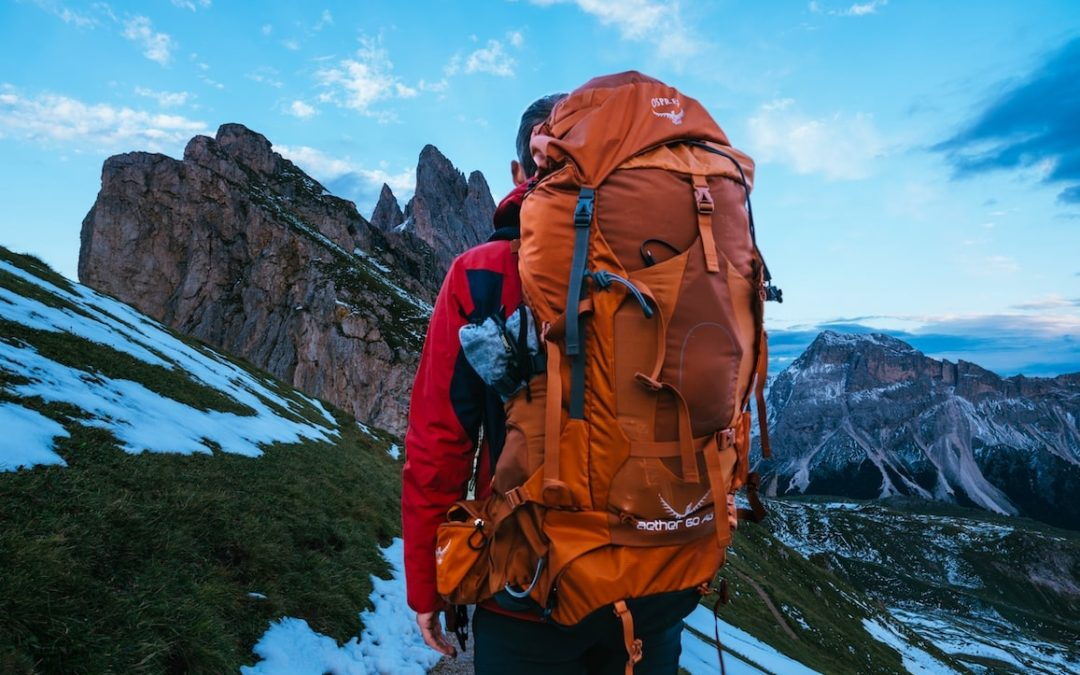
- Backpack (55–75 L for 5–12 day treks) Internal frame, strong hip belt, load-lifter straps, rain cover included, ventilated back panel. Recommended weight when fully loaded: 10–15% of body weight.
- Shelter Lightweight 3-season tent (1.2–2.5 kg for 1–2 person) + footprint OR trekking pole-supported ultralight tarp + bivy for minimalists
- Sleeping System Sleeping bag (comfort rating matching lowest expected night temp) Down (lighter) or synthetic (better in wet conditions) Sleeping pad: inflatable (R-value ≥ 3.5–4 for high altitude) or closed-cell foam backup
2. Footwear & Clothing – Master the Layering System
Mountains can change from hot sun to freezing wind and rain in minutes.
Footwear
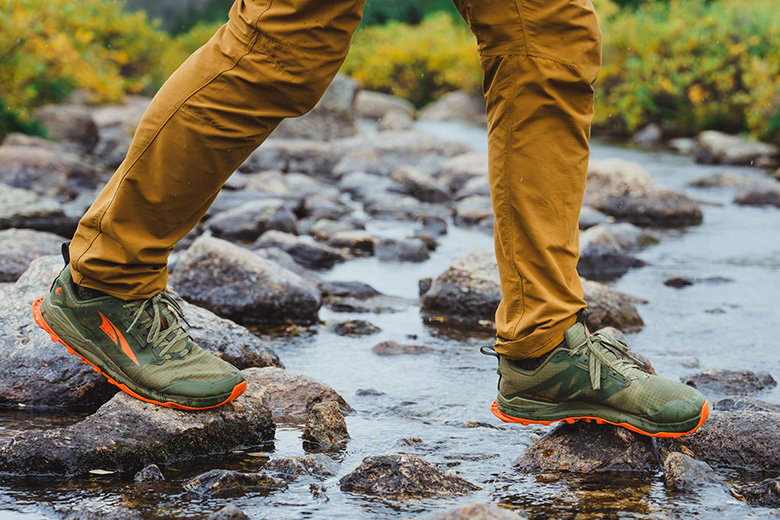
- Broken-in hiking boots (mid-cut for ankle support) or lightweight trail runners + gaiters
- 3–4 pairs merino/synthetic hiking socks (no cotton)
- Camp sandals / lightweight crocs for river crossings & evenings
Base Layer (moisture-wicking)
- 2 long-sleeve merino/synthetic tops
- 1–2 pairs base-layer leggings
Mid Layer (insulation)
- Fleece jacket or lightweight puffy (Primaloft/synthetic for wet conditions)
- Down puffy jacket (650–800 fill, packable) for high camps
Outer Layer (weather protection)
- Waterproof-breathable hardshell jacket (Gore-Tex or equivalent)
- Waterproof-breathable pants (side-zip for ventilation)
Head & Hands
- Warm beanie + sun hat / cap
- Lightweight gloves + insulated gloves/mittens
- Buff / neck gaiter (multi-use: neck warmer, dust mask, sun protection)
Bottoms
- 1–2 pairs quick-dry trekking pants (convertible zip-off ideal)
- 1 pair lightweight shorts (for lower altitudes)
3. Navigation & Safety – Non-Negotiable Items
- Physical topographic map (waterproof case) + compass
- GPS device / smartphone with offline maps (Gaia GPS, Maps.me, AllTrails) + power bank
- Personal locator beacon (Garmin inReach Mini 2 or ZOLEO) – satellite SOS
- Headlamp (200–400 lumens) + spare batteries
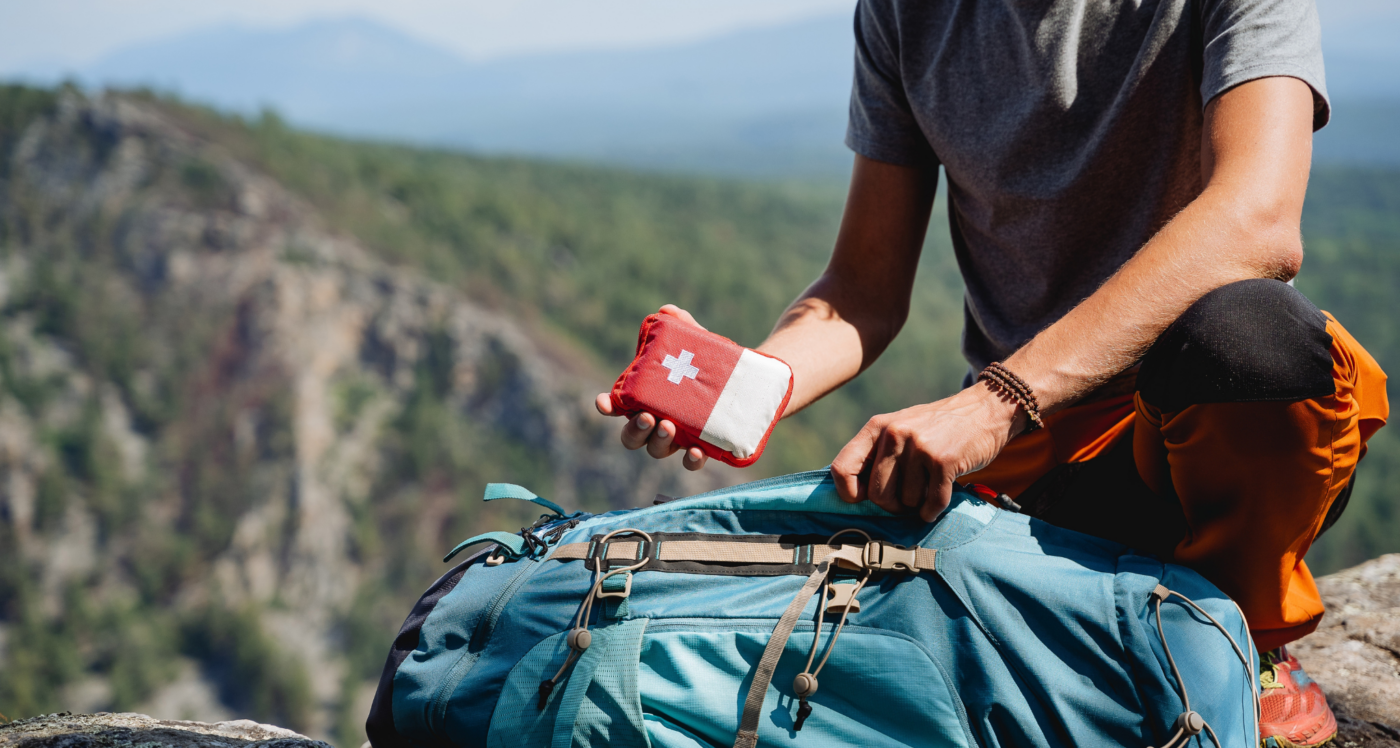
- Comprehensive first-aid kit: – Blister care (Compeed, Leukotape) – Painkillers, anti-diarrhea, altitude sickness meds (Acetazolamide/Dexamethasone – consult doctor) – Antiseptic, bandages, tweezers, scissors
- Trekking poles (collapsible, cork grips)
- Emergency bivy sack / space blanket
- Multi-tool or small knife
- Whistle & signal mirror
4. Hydration & Nutrition
- Water capacity: 2.5–4 L (bladder + bottles)
- Reliable water treatment: Sawyer Squeeze filter / chemical tablets / UV pen
- High-calorie snacks: nuts, energy bars, dried fruit, chocolate, electrolyte tablets
- Meals: lightweight freeze-dried / dehydrated (2,500–4,500 kcal/day depending on effort)
- Lightweight stove (MSR PocketRocket, Jetboil) + fuel + small pot
- Spork, collapsible mug, lightweight bowl
5. Personal & Miscellaneous Essentials
- High-SPF sunscreen (SPF 50+, reef-safe) & lip balm with SPF
- Polarized sunglasses (category 3–4)
- Biodegradable toiletries: small soap, quick-dry microfiber towel, trowel + toilet paper
- Biodegradable wet wipes & hand sanitizer
- Repair kit: duct tape, tenacious tape, needle/thread, zip ties, cord
- Headlamp batteries, power bank (10,000–20,000 mAh), charging cables
- Passport/ID copies, cash in small bills, waterproof bag
- Small dry bags (5–10 L) for organizing electronics, clothes, sleeping bag
6. Optional but Highly Recommended Items (2026 Trends)
- Lightweight solar charger or power bank with solar panel
- Compact binoculars or monocular
- Lightweight camp pillow or stuff sack pillow
- Trekking umbrella (for rain + sun in lower altitudes)
- Portable water heater (Jetboil Flash) for fast hot drinks at high camps
- Earplugs & eye mask (shared teahouse/tent noise)
Quick 2026 Packing Principles – mountain trekking checklist
- Test everything: Do at least one full-pack training hike
- Layering rule: Dress for 10–15 °C cooler than the warmest forecast
- Weight rule: Aim for base weight (everything except consumables) under 10 kg
- Leave No Trace: Pack out EVERYTHING — including toilet paper & wipes
- Altitude rule: Acclimatization days + “climb high, sleep low” when above 3,000 m
- Weather rule: Check mountain-specific forecast 5–7 days ahead
This mountain trekking checklist is designed to keep you safe, comfortable, and focused on the views rather than gear problems. Print it, customize it for your specific route, and test-pack at least twice before departure.
If you’re planning to buy trekking gear or upgrade your essentials, you can also save more by checking out discount codes and deals at Couponupto before you go.
Safe trails and epic summits in 2026!
What trek are you planning? Share in the comments—I’d love to help refine the list for your route. For more travel tips and outdoor guides, discover additional inspiration at Dealscome. Happy trekking!
