

Ha Long Bay, a UNESCO World Heritage Site in northern Vietnam, is renowned for its emerald waters, towering limestone karsts, and over 1,600 islands scattered across the Gulf of Tonkin. Translating to “Descending Dragon Bay,” this natural wonder draws millions of visitors each year with its mythical landscapes. While the surface views are breathtaking, the true magic often lies hidden beneath—in the intricate limestone caves carved over millions of years by erosion and sea level changes.
These caves, formed from ancient limestone deposits, feature stunning stalactites, stalagmites, and vast chambers illuminated by colorful lights on guided tours. Among the dozens of explorable grottoes, a few stand out for their size, beauty, and historical significance. In this blog post, we’ll dive into the most famous limestone caves in Ha Long Bay: Sung Sot (Surprise Cave), Thien Cung (Heavenly Palace Cave), and Dau Go (Wooden Stakes Cave). Whether you’re planning a cruise or simply dreaming of adventure, these underground wonders will leave you in awe.

The Geological Wonder of Ha Long’s Limestone Caves
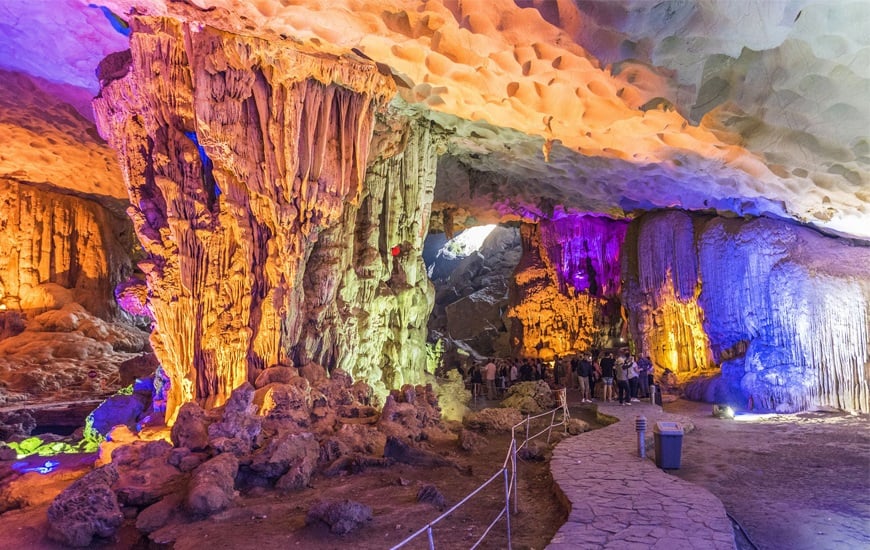
Before exploring specific caves, it’s worth understanding how these formations came to be. Ha Long Bay’s limestone karsts date back to the Paleozoic era, around 300-400 million years ago, when the area was underwater. Over time, tectonic movements lifted the seabed, and rainwater—acidic from carbon dioxide—dissolved the soluble limestone, creating vast cave systems. Sea level fluctuations further sculpted the interiors, leaving behind dramatic dripstone features.
Today, these caves are accessible via most Ha Long Bay cruises, often involving short hikes up steps to entrances hidden in the cliffs. Inside, humidity is high, paths are well-lit, and guides share legends that add a layer of mysticism. Visiting during the dry season (October to April) is ideal for clearer views and fewer crowds.
Sung Sot Cave: The Crown Jewel of Surprises
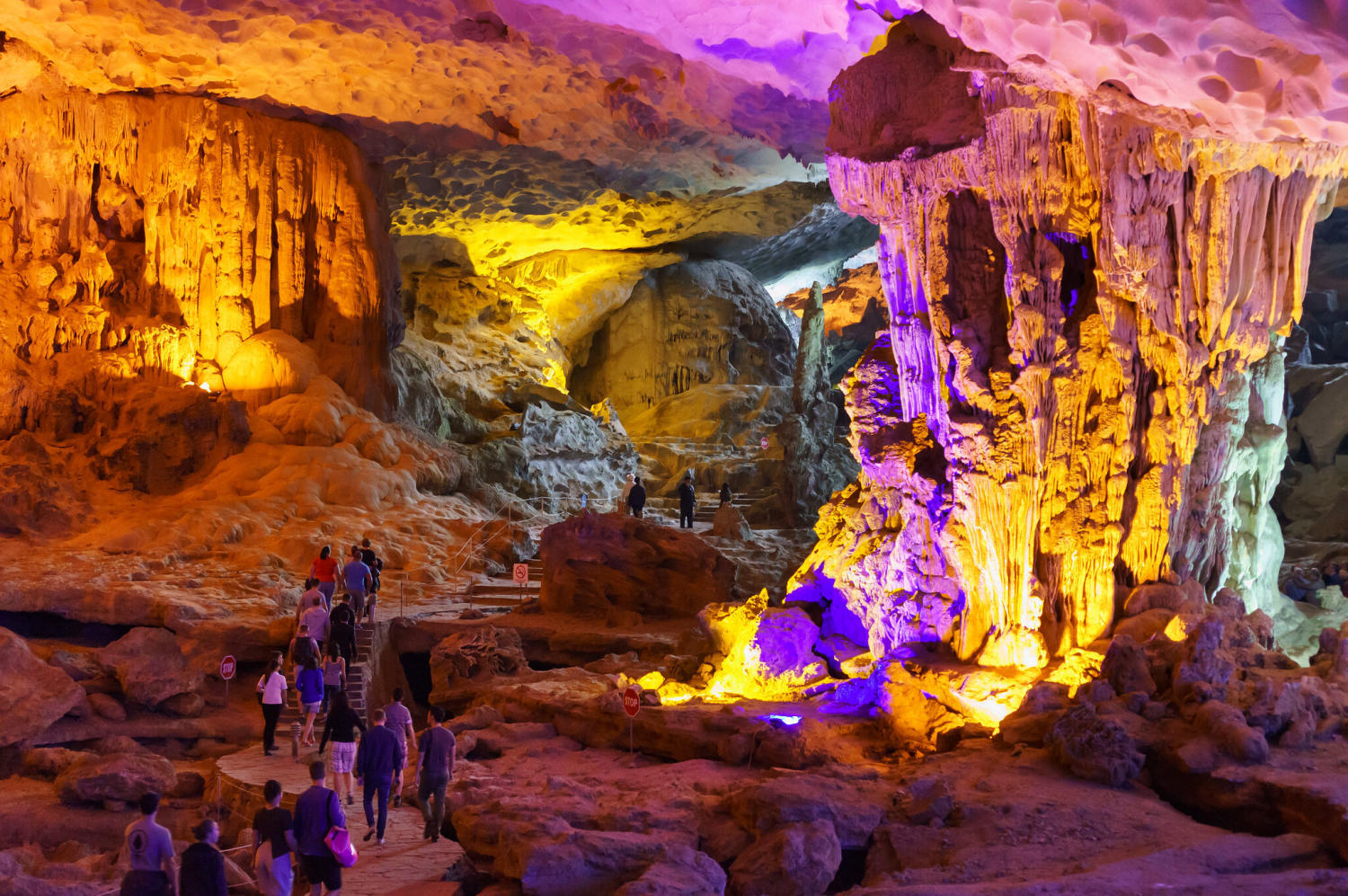
No visit to Ha Long Bay is complete without stepping into Sung Sot Cave, often called Surprise Cave. Located on Bo Hon Island in the heart of the bay, it’s the largest and most visited grotto, covering over 10,000 square meters and capable of hosting thousands of visitors at once.
The name “Surprise” comes from the astonishment early explorers felt upon discovering its immense scale and beauty. French colonists in the early 20th century were reportedly stunned by its grandeur, hence the moniker. To reach it, visitors climb a steep set of stone steps through lush foliage, emerging at an entrance that belies the vastness within.
Inside, Sung Sot unfolds in three main chambers. The first is a narrow “waiting room” leading to the second—a massive hall with a ceiling over 30 meters high, adorned with thousands of stalactites resembling chandeliers. Spotlights highlight formations that mimic animals, dragons, and even romantic figures, sparking the imagination. The third chamber opens to a serene “lake” area and a viewpoint overlooking the bay.
What makes Sung Sot truly spectacular is its lighting and scale. The cave’s pinkish hues from natural minerals, combined with creative illumination, create a surreal atmosphere. It’s no wonder it’s featured on countless postcards and ranked among Vietnam’s most stunning natural sites.
Thien Cung Cave: A Heavenly Palace Underground
Nearby on Dau Go Island lies Thien Cung Cave, translated as Heavenly Palace Cave—a name that perfectly captures its ethereal beauty. This grotto is often paired with Dau Go on cruise itineraries due to their proximity, about 4 km from the main tourist wharf.
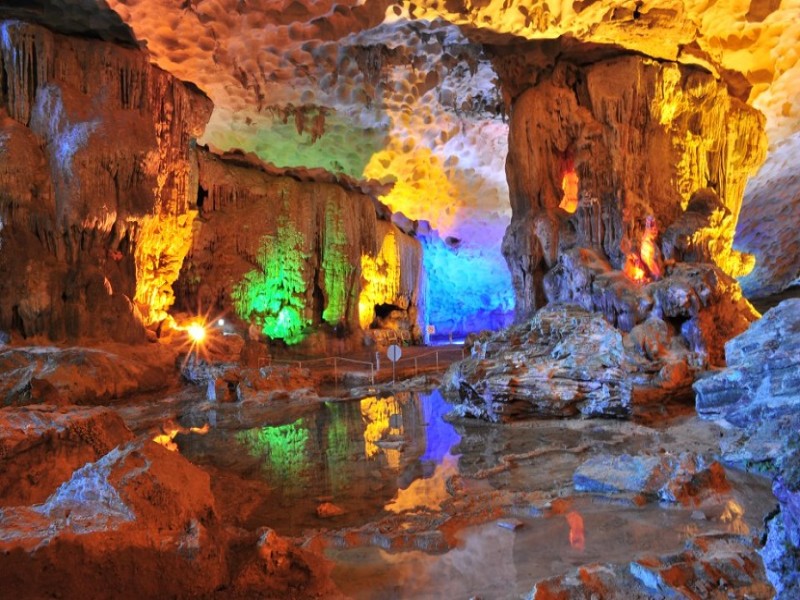
Discovered in the early 1990s, Thien Cung feels like stepping into a mythical realm. The entrance is a dramatic climb up narrow paths, revealing a cave rich in folklore. Legend tells of a dragon king who once held a grand wedding banquet here, with stalactites representing dancing dragons and flowing gowns.
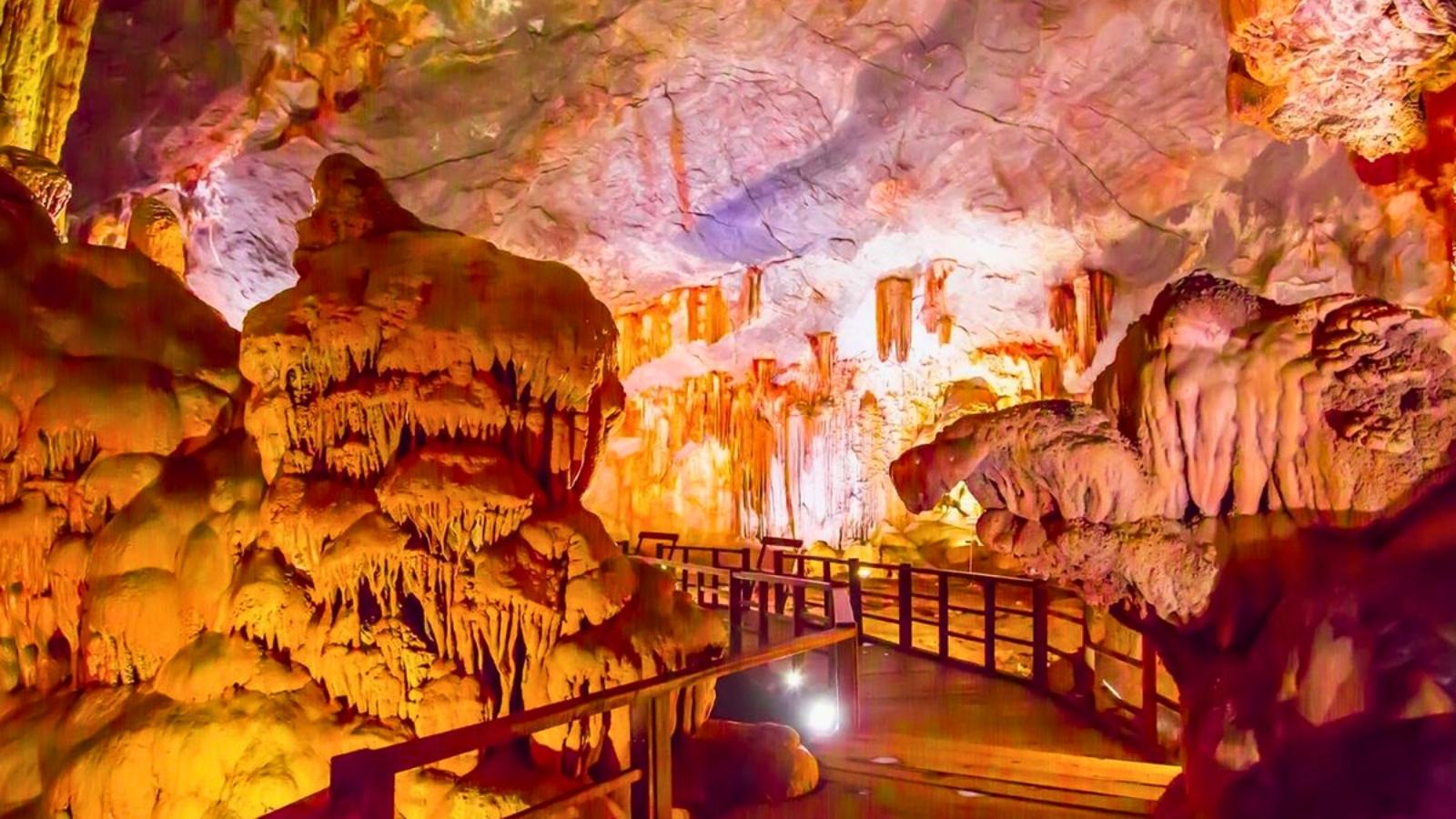
The interior is divided into several chambers, each more ornate than the last. Delicate stalactites hang like icicles from the ceiling, while stalagmites rise like ancient pillars. In the central hall, a natural “throne” and surrounding formations evoke a royal court. Soft lighting enhances the dreamlike quality, with colors shifting from white to golden hues.
Thien Cung is smaller than Sung Sot but more intricately detailed, making it a favorite for photographers and those seeking a poetic experience. Its pristine condition and fewer crowds (compared to peak times) add to the sense of discovery.
Dau Go Cave: Echoes of History and Valor
Adjacent to Thien Cung, Dau Go Cave holds a special place in Vietnamese history. Known as Wooden Stakes Cave, its name stems from the 13th century when General Tran Hung Dao allegedly hid sharpened wooden stakes here during the resistance against Mongol invaders. These stakes were later used in the famous Battle of Bach Dang River, where they impaled enemy ships at low tide, securing a legendary victory.
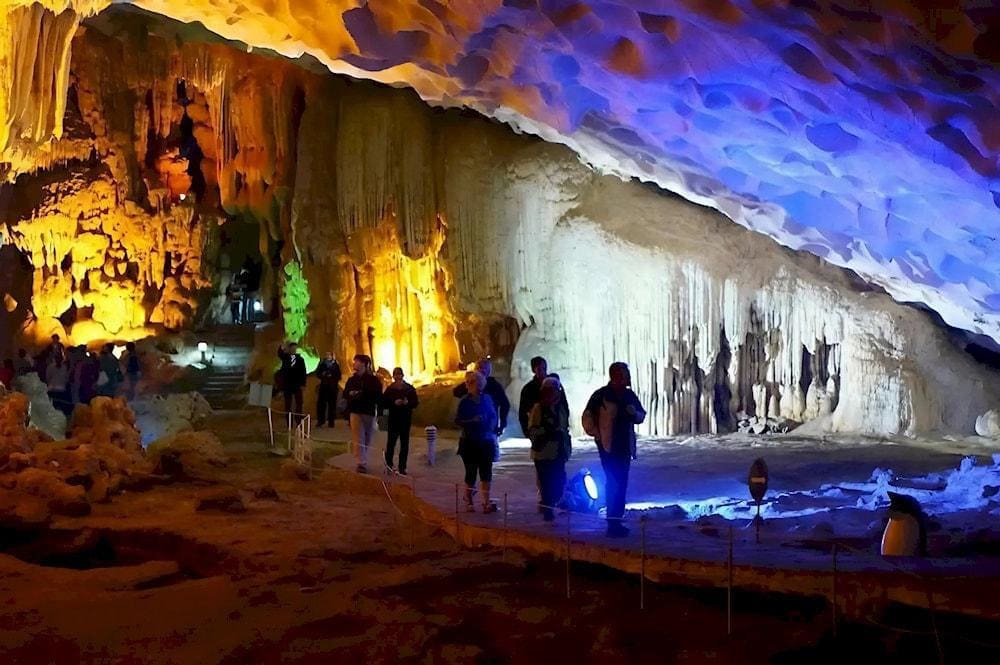
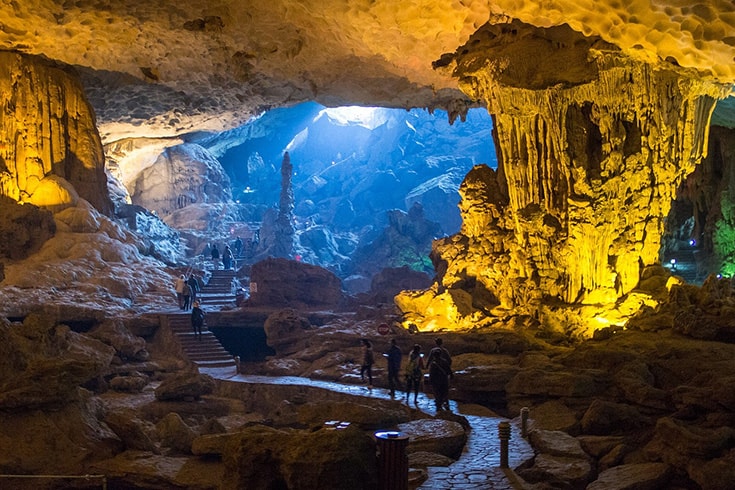
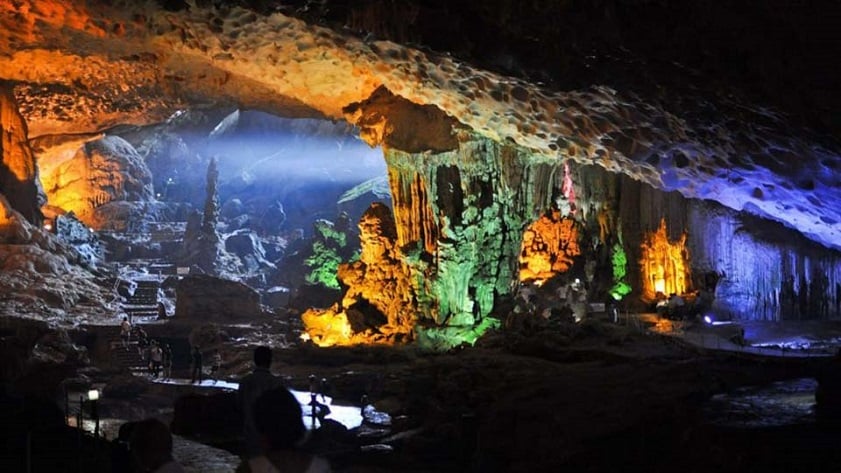
Geologically similar to its neighbors, Dau Go dates back about 2 million years. The entrance is wide and high (up to 17 meters), leading to a vast chamber filled with colossal pillars and glowing formations. The cave’s blue-tinted lighting evokes an underwater feel, reminiscent of its ancient origins.
Exploration reveals three sections: the outer with rugged rocks, the middle with impressive stalactites, and the inner with a “fairy well” of clear water. Historical significance aside, Dau Go’s raw power—massive ceilings and ancient echoes—makes it profoundly moving.
Other Notable Caves and Tips for Your Visit
While the big three dominate, don’t overlook others like Luon Cave (a water tunnel for kayaking), Me Cung (Maze Cave) with its labyrinthine paths, or Trinh Nu (Virgin Cave) tied to romantic legends. For a fuller experience, book an overnight cruise that includes multiple stops.
Practical tips: Wear comfortable shoes for slippery paths, bring water, and respect no-touch rules to preserve formations. Cruises from Tuan Chau Harbor typically cost $100-300 USD for 2-3 days, including cave visits. Sustainable tourism is key—choose operators that minimize environmental impact.
Ha Long Bay’s limestone caves are more than geological marvels; they’re portals to Vietnam’s natural and cultural heritage. From the jaw-dropping scale of Sung Sot to the legendary depths of Dau Go, these underground worlds remind us of nature’s artistry and human resilience. If you’re seeking adventure beyond the ordinary, Ha Long’s caves await—prepare to be surprised, enchanted, and inspired.
